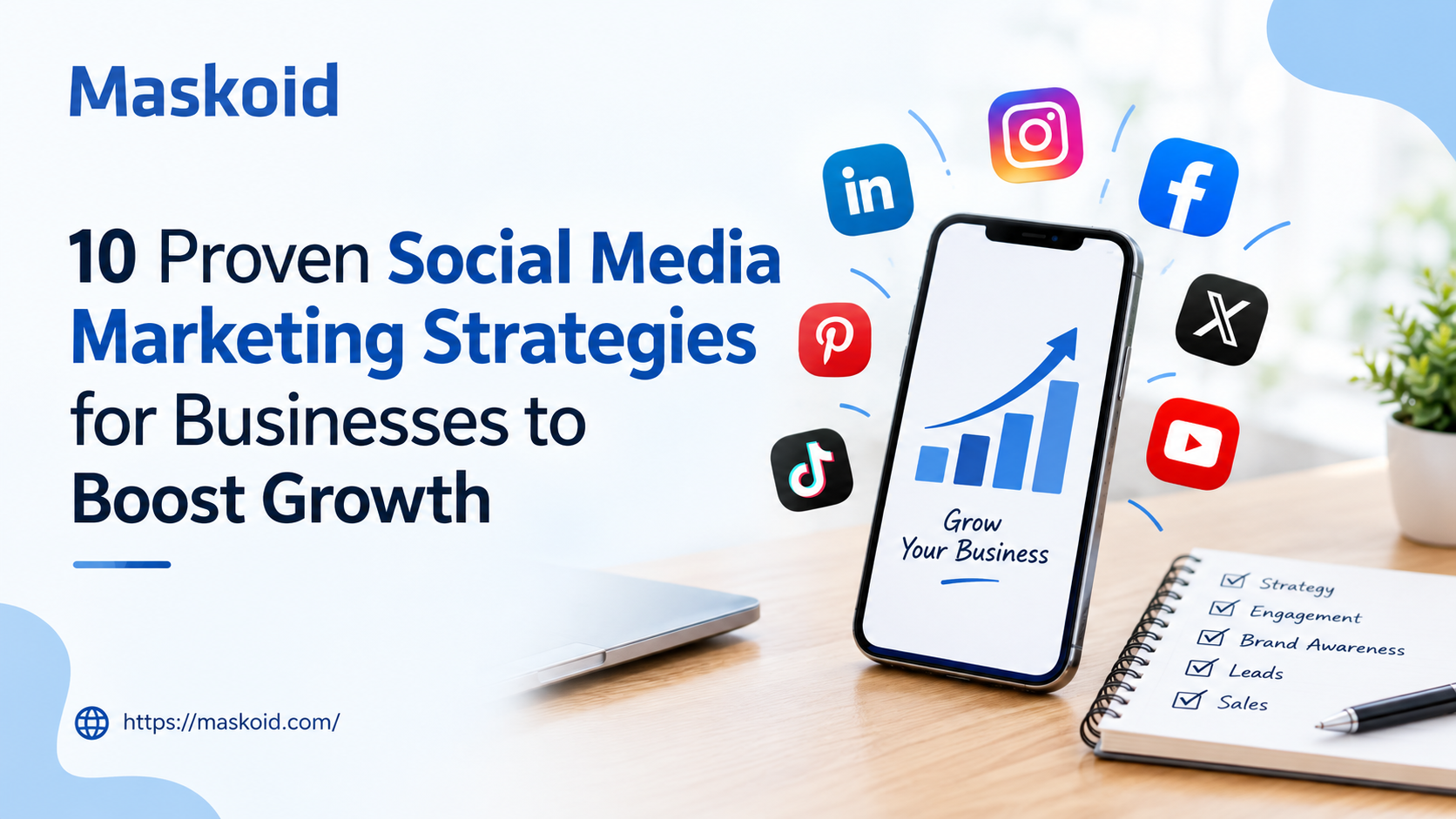
10 Proven Social Media Marketing Strategies for Businesses to Boost Growth

Let’s start with an uncomfortable truth: posting every day doesn’t mean anyone is buying. Plenty of businesses stay busy on social media for months and still can’t point to a single lead it produced. The gap is rarely worth the effort. It’s the lack of a plan. The most effective social media marketing strategies for businesses begin with a goal, a clear picture of who you’re talking to, content people actually want, real conversations and a habit of checking what worked. Below are ten strategies you can use, with what to do, why it matters and what to measure. After that you’ll find a simple workflow, the mistakes businesses make most often and answers to common questions.
Why Social Media Marketing Matters for Business Growth?
Social media does different jobs depending on where a customer is in their decision. Early on, it helps people discover you through content, search inside the platforms and recommendations. Later, it gives them a place to ask questions, watch how you treat other customers and decide whether to trust you. It can send visitors to your website, explain a product in a few seconds of video and show you exactly what customers find confusing. Paid campaigns add reach that you can tie to specific actions.
None of this is guaranteed. What you get depends on your audience, industry, offer, budget, content quality and how well you execute, so treat every idea below as something to test against your own numbers.
10 Proven Social Media Marketing Strategies for Businesse
1. Set Clear Social Media Goals Before You Start
Goals decide everything else: what you post, where you post and what goes in the monthly report. Without one, you end up judging a post by whether it felt good. Start from a business outcome, such as more qualified website visits, more inquiries or better support for sales calls, then put a number and a date on it.
“Get more followers” is easy to hit and rarely pays the bills. A stronger version: “Generate 30 qualified inquiries from LinkedIn and Instagram within three months, tracked through the contact form and tagged links.” That figure is only an illustration, so base yours on your own starting point. Pick one main goal per quarter, add one or two supporting ones and decide how you’ll track them before you publish anything. The number to watch is progress against that goal, such as qualified inquiries or tracked link clicks.
2. Understand Your Target Audience and Their Needs
Content lands when it answers something people already want to know, so collect those questions first. Pull follower demographics and top-performing content from your platform analytics. Write down what keeps coming up on sales calls, in support emails and in comments. Glance at competitors to see what their audience responds to, but treat that as context, not a template.
The same idea can mean very different audiences. A B2B software firm might aim at operations managers on LinkedIn with process-focused posts and webinars, because the buying cycle is long and several people weigh in. A neighborhood bakery is better off reaching nearby residents on Instagram and Facebook with daily specials, local events and short videos, because the decision is quick and tied to location. Track engagement by audience segment, and how many of your followers actually match your target customer.
3. Choose the Right Social Media Platforms for Your Business
The best social media marketing strategies for businesses don’t look alike, and no platform wins for everyone. Choose based on where your customers already spend time, which formats you can make well and how many channels your team can keep up with. Start with one or two and add more only when quality holds.
Platform | Suitable use case | Recommended formats | Main metrics |
Visual products and services, lifestyle and local brands | Reels, carousels, Stories, images | Reach, saves, shares, profile visits | |
Local businesses, communities, events, broad consumer audiences | Posts, groups, events, short video, ads | Engagement, link clicks, messages | |
B2B services, recruitment, thought leadership | Text posts, documents, articles, video | Impressions, engagement rate, leads | |
YouTube | Tutorials, product demonstrations, long-term educational content | Long-form video, Shorts | Watch time, retention, subscribers |
Formats and features change often, so check each platform’s official help pages before building a plan. Then compare results per platform against the time you spend on it. That comparison shows you where to double down.
4. Build a Consistent and Valuable Content Strategy
A content strategy is what lets you post consistently without turning every post into a sales pitch. The simplest tool is content pillars: three to five recurring themes such as education, product explainers, behind-the-scenes, customer stories and promotions. Build them from audience questions and business priorities, keep most posts helpful or informative and let promotion be the smaller share. Plan only what you can sustain. Here’s one week for a service business:
Day | Pillar | Post idea |
Monday | Education | Carousel answering a common customer question |
Wednesday | Behind-the-scenes | Short video of the team preparing a project |
Thursday | Customer story | Permission-based client feedback or project summary |
Friday | Promotion | Service explainer with a clear call to action |
After a month or two, compare engagement rate and link clicks by pillar. That tells you which themes deserve more space.
5. Use Short-Form Videos and Platform-Native Content
Reels, Shorts and other short videos work well for demos, quick tips and explaining a product in under a minute. Use each platform’s native format instead of reposting something clearly made for somewhere else. Lead with the main point or a good question, stick to one idea per video, add captions because plenty of people watch on mute, and finish with a simple next step like visiting a page or sending a message.
No video length is best for everyone, and nothing guarantees viral reach, so test lengths and styles with your own audience. Look at views, average watch time or retention, shares and whether anyone took the next step.
6. Encourage Meaningful Engagement and Build a Community
Social media works in both directions. Reply to comments and messages promptly, answer questions publicly when others may be wondering the same thing, start conversations your customers care about and let what you hear shape future content. A hundred thoughtful interactions teach you more than a jump in followers.
Say customers keep asking how long delivery takes. Instead of answering each one privately, make a short video or carousel that walks through the process, then pin it or link it in your replies. Keep an eye on comment quality, response time, messages received and repeat interactions.
7. Use Social Media Advertising Strategically
Paid social extends your reach and lets you test messages faster than organic posting alone. Options vary by platform, and you need to follow each platform’s advertising and privacy rules.
A workable order of operations: pick an objective that matches your goal, such as traffic or leads. Define the audience with the platform’s targeting options, and consider retargeting site visitors where policy allows. Test a few creatives and headlines against each other, and make sure the landing page keeps the promise the ad made. Set up conversion tracking before you spend anything, then add budget gradually as results come in.
For example, a training provider could run a lead-generation campaign for a free webinar, test two videos and two headlines, and send people to a short registration page. Returns depend on the offer and the audience, so none are promised here. For a paid-media comparison, see Maskoid’s article on Google AdWords vs Facebook Ads. Track cost per lead, click-through rate, conversion rate and, where revenue is tracked, return on ad spend.
8. Collaborate With Relevant Creators and Partners
A creator your audience already trusts can introduce you faster than an ad can. Look at audience fit, credibility, content quality, the quality of their engagement (not just the count) and whether their goals match your campaign. Micro-influencers and niche creators often suit specialized offers, and industry partnerships and customer-created content can work too.
Two rules matter. First, sponsorships and other material connections must be clearly disclosed; the U.S. Federal Trade Commission explains this in its Disclosures 101 for Social Media Influencers, and local rules may differ. Second, get permission before reusing a creator’s or customer’s content.
Judge each collaboration by the qualified clicks, saves, shares and conversions you can attribute to it.
9. Optimize Your Posting Schedule and Content Distribution
There’s no universal best time to post. Use your platform analytics to see when your audience is active, try a few schedules and keep the one your team can actually sustain.
Repurpose with care. A webinar can become a LinkedIn post, a short clip, a carousel and a blog summary, but adapt the format, caption and message for each channel instead of pasting the same thing everywhere. Compare reach and engagement by posting time and format over several weeks before you change your routine.
10. Measure Results and Continuously Improve Your Strategy
Review performance on a regular schedule and change things based on what you see. This is where social media marketing strategy and optimization meet: measure, change one thing, learn, repeat.
Metrics to review:
- Reach and impressions: how many people saw the content and how often.
- Engagement rate: total engagements (likes, comments, shares, saves) divided by reach, multiplied by 100. State whether you use reach, impressions or followers as the denominator and keep it consistent.
- Video retention or completion: where available in the platform’s analytics.
- Link clicks and website sessions: movement from social to your site.
- Qualified leads and conversion rate: the share of visitors who take a valuable action.
- Cost per lead and return on ad spend: for paid campaigns only.
Activity metrics such as likes show interest. Business outcomes such as qualified leads and sales show impact. Report both, but judge success by the outcomes.
Illustrative monthly review (hypothetical figures, not real results):
Metric | Month 1 | Month 2 | Takeaway |
Link clicks | 400 | 520 | Educational carousels drove most clicks |
Qualified leads | 12 | 15 | Lead rate held steady |
Cost per lead (paid) | 20 | 17 | Better creative reduced cost |
The decision that follows: publish more of the carousel format and retest the weaker ad creative next month.
How to Develop and Optimize a Social Media Marketing Strategy?
The ten strategies work best as a cycle. A practical social media marketing strategy development workflow looks like this:
- Audit existing accounts and content to see what already works.
- Define business objectives and audience segments.
- Select suitable platforms and content pillars.
- Create a content calendar and campaign plan.
- Publish content and engage with the audience.
- Monitor performance against your defined KPIs.
- Test improvements and adjust.
The last step feeds the first. Social media marketing strategy and optimization are ongoing work, not a one-time task, because audiences, platforms and your own offers keep changing. A plan nobody reviews goes stale quickly.
Readiness checklist:
- We have written, measurable goals.
- We know our main audience segments and their questions.
- We have chosen platforms we can maintain.
- Our content pillars and calendar are defined.
- Someone owns replying to comments and messages.
- Conversion tracking is set up for links and ads.
- We have a regular date to review results.
Common Social Media Marketing Mistakes Businesses Should Avoid
Mistake | How to correct it |
Posting without clear objectives | Set measurable goals and tie each post to one. |
Trying to be active on every platform | Focus on one or two where your audience is. |
Overly promotional content | Make most posts educational or useful, with promotion in the minority. |
Ignoring comments and messages | Assign an owner and a response routine. |
Buying followers or engagement | Stop; it distorts data and does not build real customers. Grow through useful content. |
Copying competitors blindly | Study them for context, then base decisions on your audience. |
Advertising without conversion tracking | Set up tracking first so spend can be judged. |
Focusing only on likes and followers | Add leads, conversions and cost per lead to reports. |
Never reviewing results | Schedule a monthly review and update the plan. |
How Maskoid Technologies Can Support Your Social Media Marketing Efforts?
Maskoid Technologies is a digital marketing company in vadodara. We provide social media services, SEO services, PPC service, Web design, Web development services, IT Infrastructure management services, Mobile app development services. If you don’t have the time or in-house skills to run all of this yourself, a team working across channels can keep social media in step with the rest of your marketing, such as SEO for search visibility and PPC for paid campaigns. You can read about the full social media marketing service on the site, and if you’d like to talk through your goals, audience and current channels, the team would be glad to hear from you.
Conclusion
Successful social media marketing is not about posting more often or chasing likes and followers. It is about understanding your audience, sharing valuable content, choosing the right platforms, building genuine relationships and measuring the results that matter to your business. By implementing these 10 proven social media marketing strategies for businesses, you can create a more focused marketing plan, improve audience engagement and identify opportunities to generate qualified leads and long-term growth.
Start with a few strategies that align with your business goals, track your performance and refine your approach based on real data. Remember, consistent improvement is more valuable than simply staying active online.
If you need expert support to plan and manage your social media campaigns, Maskoid Technologies can help you strengthen your online presence through social media marketing, SEO, PPC and other digital marketing services. Take the next step toward a more effective digital marketing strategy and turn your social media efforts into measurable business opportunities.
Frequently Asked Questions
Which social media platform is best for a small business?
There is no single best platform. Choose based on where your customers spend time and which formats you can produce consistently. A local shop may favor Instagram and Facebook, while a B2B firm may prefer LinkedIn. Start with one or two and review results.
How do I develop a social media marketing strategy?
Begin with an audit and measurable goals, then define audiences, pick platforms and content pillars, and build a calendar. Publish, engage, track results against your KPIs and refine. Effective social media marketing strategy development repeats this cycle rather than ending at the plan.
How often should a business post on social media?
Post as often as you can sustain with good quality. Consistency matters more than volume. Start with a manageable rhythm, such as a few posts per week, then adjust using your analytics and audience response rather than a fixed rule.
How can social media marketing increase sales?
It can build awareness, answer buying questions, earn trust and send qualified traffic to pages where people can act. Paid campaigns can add targeted reach. Sales depend on your offer, audience and follow-up, so track leads and conversions, not only engagement.
How do businesses measure social media marketing success?
Compare results with the goals you set. Review reach, engagement rate, link clicks, website sessions, qualified leads and conversion rate, plus cost per lead and return on ad spend for paid campaigns. Business outcomes matter more than likes or follower counts.