What Is Pay Per Click Marketing in Digital Marketing?

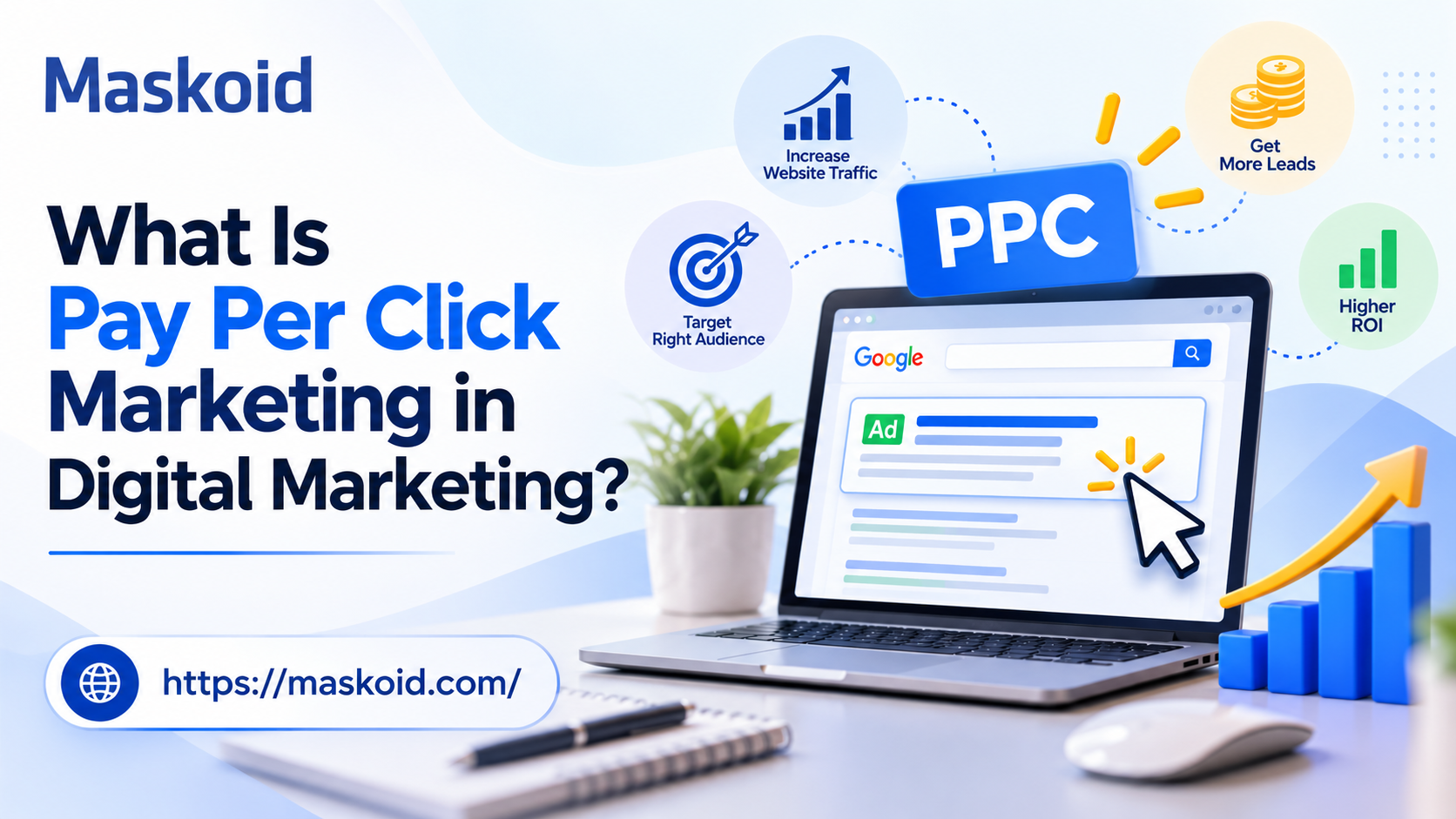
If you have ever seen “Sponsored” results above regular Google listings, you have already seen PPC in action. So, what is pay per click marketing? In simple terms, it is an advertising model where a business pays when someone clicks its ad, rather than for the ad simply appearing. Businesses use it to reach people who are already searching for something related. Results depend on planning, budget, and testing, but PPC is one of the more measurable forms of digital advertising.
What Is PPC Marketing?
PPC stands for pay-per-click. It is a paid advertising model in which the advertiser pays when a user clicks an ad. The amount paid for each click is the cost per click, or CPC. Ads can appear on search results, websites, apps, video platforms, and social feeds. Unlike organic search, where pages earn rankings without payment for placement, paid search ads are placed through an auction and labelled as ads.
How Does PPC Marketing Work?
Knowing what is pay per click marketing on paper helps less than seeing the process. On Google Ads, it looks like this:
- Define the goal, such as calls, form fills, or online orders.
- Research keywords and audiences that fit it.
- Create the campaign and write the ads.
- Set a campaign budget and bidding strategy.
- Eligible ads enter the ad auction when someone searches.
- Ads that qualify are shown to relevant users.
- You pay under your chosen model, usually per click.
- Review the data and keep optimising.
Bidding more does not automatically win the top position. Google also weighs ad relevance, expected click-through rate, landing page experience, search context, and competition, so a well-matched ad can outrank a higher bid.
What Are the Main Types of PPC Advertising?
Search ads appear when people type queries into Google. Display ads are banners across websites and apps. Shopping ads show products with images and prices. Video ads run on platforms like YouTube. Remarketing shows ads to people who already visited your site. Paid social advertising runs on platforms such as Meta and LinkedIn, targeting by interests rather than search intent.
How Much Does PPC Advertising Cost?
There is no fixed price. Cost depends on industry, competition, keywords, location, audience, campaign objective, ad quality, and landing page experience. Campaign budget is what you are willing to spend per day or period. Maximum CPC is the most you will bid for a click, while actual CPC is what you really pay, often lower. Cost per conversion is total spend divided by leads or sales. Fees for pay per click advertising services are usually separate from the ad spend paid to the platform.
What Makes a PPC Campaign Effective?
Start with keywords that match what buyers actually search. Someone typing “emergency plumber near me” shows stronger search intent than someone typing “how pipes work”. Write ad copy that says plainly what you offer, and send clicks to a matching landing page instead of a generic homepage. Set up conversion tracking so you know which clicks become enquiries. Add negative keywords to block irrelevant searches, watch the budget, and review click-through rate and conversion rate regularly.
What Are the Benefits of PPC Marketing?
PPC reaches people while they are searching, so visibility can begin soon after launch instead of waiting for organic rankings. You can target by location, device, and time, control spend, test different messages, and track measurable results. It can support lead generation or online sales, though profitability still depends on your margins, offer, and website.
PPC vs SEO: What Is the Difference?
Factor | PPC | SEO |
Visibility | Paid | Organic |
Cost model | Usually based on clicks or campaign objectives | Investment in organic growth |
Speed | Can generate visibility quickly after launch | Usually takes longer |
Long-term effect | Stops or changes when campaigns stop | Can keep generating organic visibility |
Control | High control over targeting and budget | Less direct control over rankings |
Best suited for | Targeted paid visibility | Sustainable organic visibility |
Neither is automatically better; many businesses run both.
When Should a Business Consider PPC?
PPC tends to make sense when there is clear commercial search demand, such as people searching for your service directly. It also suits new offers and businesses serving a specific area. A dental clinic or furniture showroom can aim ads at nearby searches, and local companies exploring ppc services in vadodara often begin with exactly that kind of location targeting. PPC can also run alongside SEO, bringing traffic while organic work builds up.
Common PPC Mistakes to Avoid
The usual mistakes are targeting broad, irrelevant keywords, ignoring negative keywords, and sending every ad to the homepage. Others set a budget without a clear goal, chase clicks instead of conversions, skip conversion tracking, overlook mobile users, never test ad copy, or stop optimising after launch. Without tracking, you cannot tell which spend worked. These apply whether you manage ads yourself or hire a ppc marketing agency.
How to Choose PPC Support for Your Business
When comparing a ppc marketing agency or an independent specialist, look past the pitch. Do they ask about your business model and margins before suggesting a budget? Do they set clear objectives and conversion tracking? Ask how they handle keyword and audience research, how they judge landing pages, and how often they optimize. Reporting should be transparent, showing spend, clicks, conversions, and cost per conversion. For pay per click advertising services, ask who owns the ad account and how performance will be discussed.
Conclusion
If you began this article asking what is pay per click marketing, the short version is paid advertising where you pay for clicks, with ad placement shaped by bids, relevance, and landing page quality. It can bring targeted visitors, but only when goals, tracking, and optimisation are handled properly. Anyone comparing ppc services in vadodara or elsewhere should judge providers on clarity and reporting rather than promises. For a closer look at one team’s approach, Maskoid Technologies explains its PPC work on its service page.
Frequently Asked Questions
What is PPC marketing in simple words?
It is online advertising where you pay when someone clicks your ad. You choose keywords or audiences, set a budget, and your ads appear on platforms like Google. The goal is to bring interested people to your website, phone line, or shop.
Do you pay every time someone sees a PPC ad?
Not usually. With cost-per-click bidding, you pay only when someone clicks. Some campaigns use impression-based pricing such as CPM, where you pay for views, so the model depends on the campaign type and bidding strategy you select in the account.
How much does PPC advertising cost?
It varies. Costs depend on your industry, keywords, location, competition, and ad quality. You control the budget, but actual CPC changes with each auction. A better measure than cost per click is cost per conversion, since it shows what an enquiry or sale actually costs you.
Is PPC better than SEO?
Neither is better in every case. PPC offers quicker, controllable visibility while campaigns run, and SEO builds organic visibility over a longer period. The right mix depends on your goals, budget, timeline, and competition, and many businesses use both together.
Can small businesses use PPC advertising?
Yes. Small budgets are workable. A local business considering ppc services in vadodara can start with a small daily budget, tight location targeting, and a few high-intent keywords, then expand only when conversion tracking shows the spend is working.